


But Why: A Podcast for Curious Kids

But Why is a show led by you, kids! You ask the questions and we find the answers. It’s a big interesting world out there. On But Why, we tackle topics large and small. From why flamingos stand on one leg to how circuits work to whether it’s ever okay to lie. No question is off limits, and we let your curiosity guide us!


Featured Episode
-
 But Why encourages kids to explore their curiosity about anything, including government and civics! We’ve collected a few But Why episodes to around voting and elections to teach kids about elections.

Never miss an episode. Subscribe in your favorite app:
Loading...

We take questions from kids all over the world and on any topic you’re interested in. Grab an adult to help you submit your question (you need to get their permission) and have them grab a recording device (a smartphone with the built in voice recording app works great). Have a question? Submit it here!


Latest Episodes
-
 This is But Why’s 300th episode! It’s safe to say we’ve answered several thousand questions from kids all over the world. We asked our listeners to tell us about their favorite episodes and today we’re hearing from all of you! We also hear a bit from a few of the podcasts you have on repeat!
 -
 How does our body make our voice? How do voice boxes work? What makes our voices so different? Why are boys' voices often lower than girls' voices? Why does your voice sound different when you are sick? Why does your voice sound weird when you listen to a recording of yourself? Answers to questions about voices with Dr. Anne Hseu, an otolaryngologist (ear, nose and throat doctor) at Boston Children’s Hospital.
 -
 What is a fossil? How are they formed? Where are they found? What’s the oldest fossil, and what’s the biggest? When you think of a fossil you might be picturing a full dino skeleton preserved at a museum. But fossils come in many different shapes and sizes. We taped this episode all about fossils in front of a live audience at the South Burlington Public Library in Vermont, with special guest Charlotte Mehrtens, a retired geology professor from the University of Vermont.
 -
 How are constellations formed? How many stars are there? What are stars made of? Why are there stars in the sky? Why are stars white? Why are some stars red? Why do stars twinkle? Why do we only see the stars at night? Why is the north star always facing north? We answer your questions about the stars and astronomy with Talia Sepersky of the Museum of Science in Boston.
 -
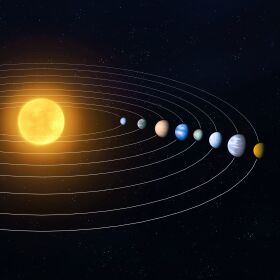 Join us on a tour of our solar system with John O’Meara, chief scientist at the W.M. Keck Observatory in Hawaii. We’ll answer all of your questions about planets! How were the planets in our solar system made? Why are some planets made of gas and others are made of rock? How do planets stay in space? Why is Venus the hottest planet if it's not the closest to the sun? Why is Earth more like Mars than Venus? Why do dust storms happen on Mars? Why is the storm on Jupiter red? Why does Saturn have rings? What is a dwarf planet?
 -
 Have you ever seen your dog play with another dog? Have you seen squirrels chasing each other in the woods? Are they playing or are they doing something else? We look at the behavior of animals with Marco Wendt, Wildlife Ambassador for the San Diego Zoo Wildlife Alliance and host of Amazing Wildlife: A San Diego Zoo Podcast. Also in this episode: Why do pigs like to play in the mud? Why do elephants like to play in the mud? Why do hamsters like to play? Is it okay for animals to live at the zoo?
 -
 Right now, the 2026 FIFA men’s World Cup is happening across 16 cities in the United States, Canada and Mexico and it’s time to learn a little bit about soccer…or should we say football? That’s one conundrum we’ll be tackling: why is it called soccer in some countries and football in others? We’ll also look at World Cup questions like where the first tournament was played and what makes the trophy so special. Plus: what are the basic rules of the game? Why are soccer balls often black and white? How come goalkeepers are allowed to use their hands? And what does offside actually mean? In this episode, we meet up with Meg Linehan, women’s sports lead for The Athletic at a Vermont Green FC training session and ask her all your soccer-related questions.
 -
 How are video games made? Who invented the concept? Why do games have levels? Who invented them? Why are game consoles so expensive? Why do people like playing these games so much and do they turn your brain to mush? What do you do if you can’t make yourself stop playing? In this episode, we talk with Patrick Klepek, writer and editor of Crossplay, a newsletter focused on video games and parenting.
 -
 What is ADHD? How does ADHD affect the brain? Why do only some people have it? How can we control our brains? An estimated 11 percent of U.S. kids are diagnosed with the neurological condition known as ADHD, so you may have it or have a friend or classmate with this unique way of thinking. In this episode we explore how you can learn to balance the strengths and challenges of ADHD with Dr. Liz Angoff, author of the Brain Building Book.
 -
 But Why encourages kids to explore their curiosity about anything, including government and civics! We’ve collected a few But Why episodes to around voting and elections to teach kids about elections.


But Why is a project of Vermont Public.
